


Paphos • Dec 11
How to Train Your Robot
A Practical Guide to Physical AI
From Hard-Coded Logic to Learned Skills
Positronic Robotics
My Journey to Robotics
Following the "Data Complexity" Curve
Google (Search Ranking)
Organizing the world's text.
WANNA (Acq. by Farfetch)
Computer Vision & AR.
Farfetch
Fashion Tech Platform.
Positronic Robotics
Physical AI.
Sergey Arkhangelskiy
Founder & CEO @ Positronic
The Trap of Explicit Programming
The world is too messy for 'If/Else'
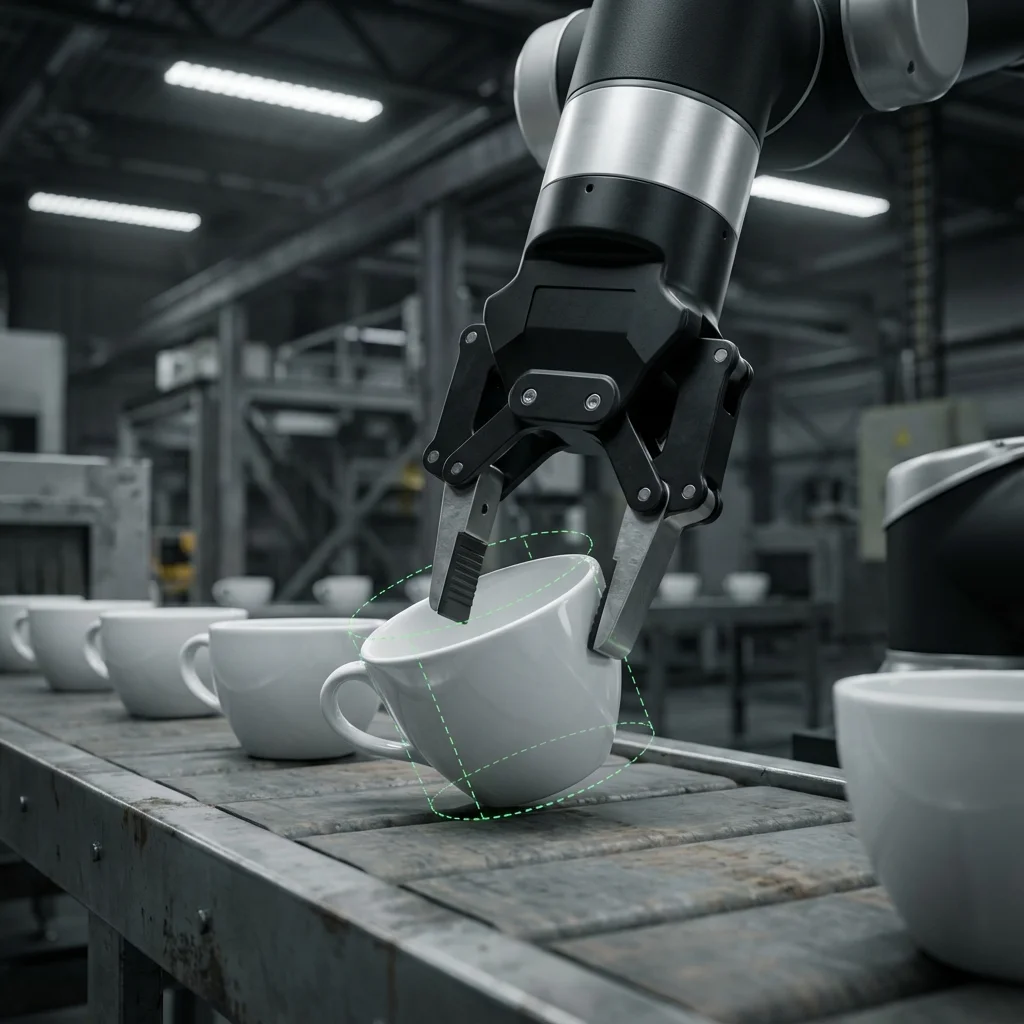
The "Long Tail" Problem
- ⚠️ Lighting changes by 10%
- ⚠️ Object moves by 5mm
- ⚠️ Cable stiffness varies
"High-level reasoning is easy. Low-level motor skills are hard."
End-to-End Learning
Pixels $\to$ Actions
Explicit Code
Manually programmed logic.
Learned Policy
Shown what to do.
What Does the Model See?
Multimodal Fusion
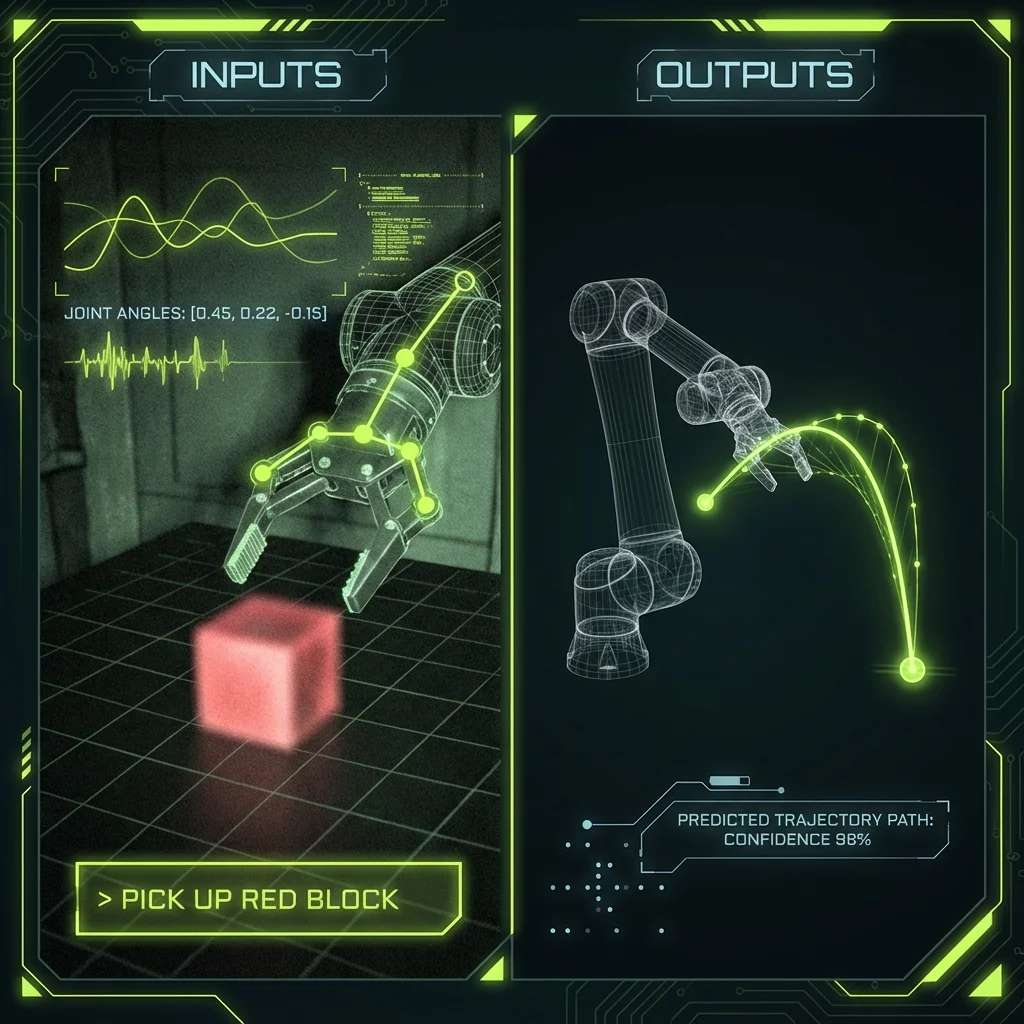
Inputs ($o_t$)
- Vision: RGB Images
(Wrist + 3rd person) - Proprioception: Joint angles, Gripper 3D position, Gripper width
- Language: "Put the red block on the plate"
Outputs ($a_t$): Action Chunking
Predicting the Future.
$\pi(o_t) \to \{a_t, ..., a_{t+k}\}$
Ensures smoothness & temporal consistency.
The "Robot Internet" Doesn't Exist (Yet)
We have to build the dataset manually
Teleoperation (The Gold Standard)
Humans "puppet" the robot to collect ground-truth data.
Quality is king: "Garbage In, Garbage Out."
- Device: Leader Arms (ALOHA) or VR (Meta Quest 3).
- Costly but necessary for manipulation.
Sim-to-Real (RL)
Training in physics engines (Isaac Lab, MuJoCo).
Great for locomotion, hard for contact-rich manipulation.
Quality > Quantity
Insights from Generalist Models
Active Data
Volume: Tiny
"The Body"
Passive Video
Volume: $\infty$
"The Brain"
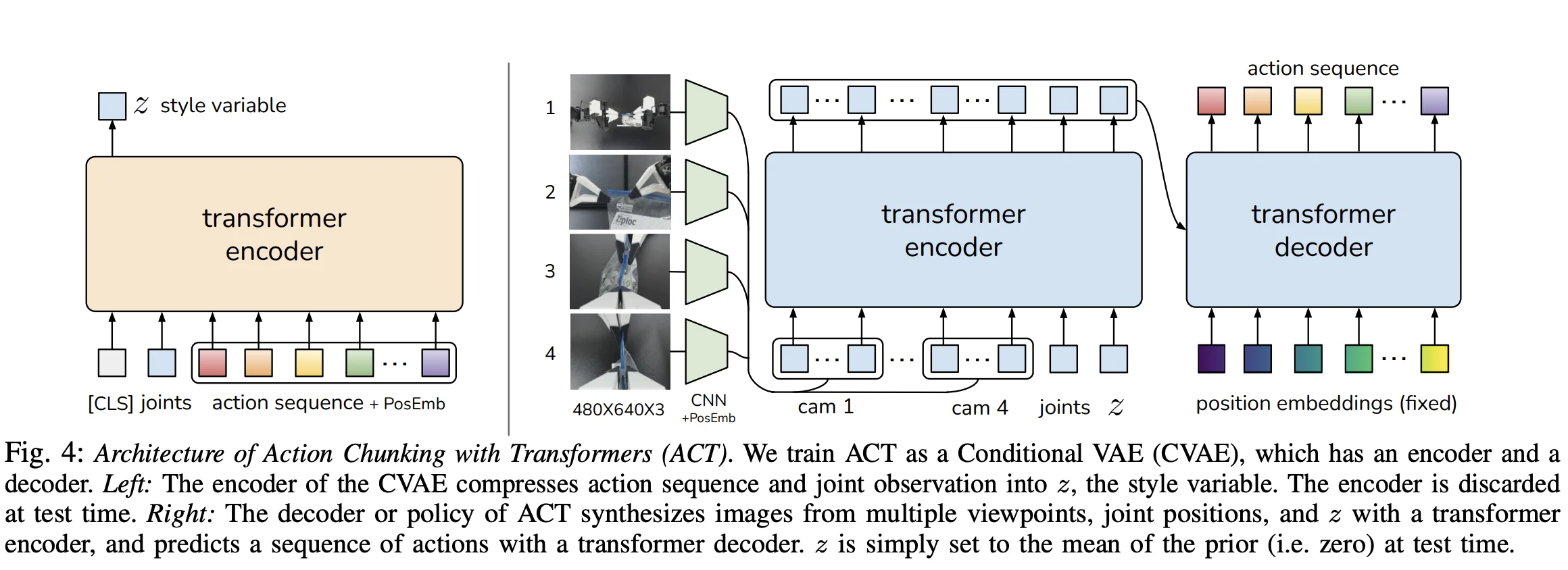
ACT: Action Chunking with Transformers
Tony Z. Zhao et al. (2023)
Uses a CVAE (Conditional Variational Autoencoder) to model multimodal action distributions, handling the inherent uncertainty in human demonstrations.
Key Idea: Action Chunking
Instead of predicting one step at a time, predict a fixed sequence (chunk) of actions ($k \approx 100$). This drastically reduces "compounding errors" (drifting off course) and produces smooth, coherent motions.
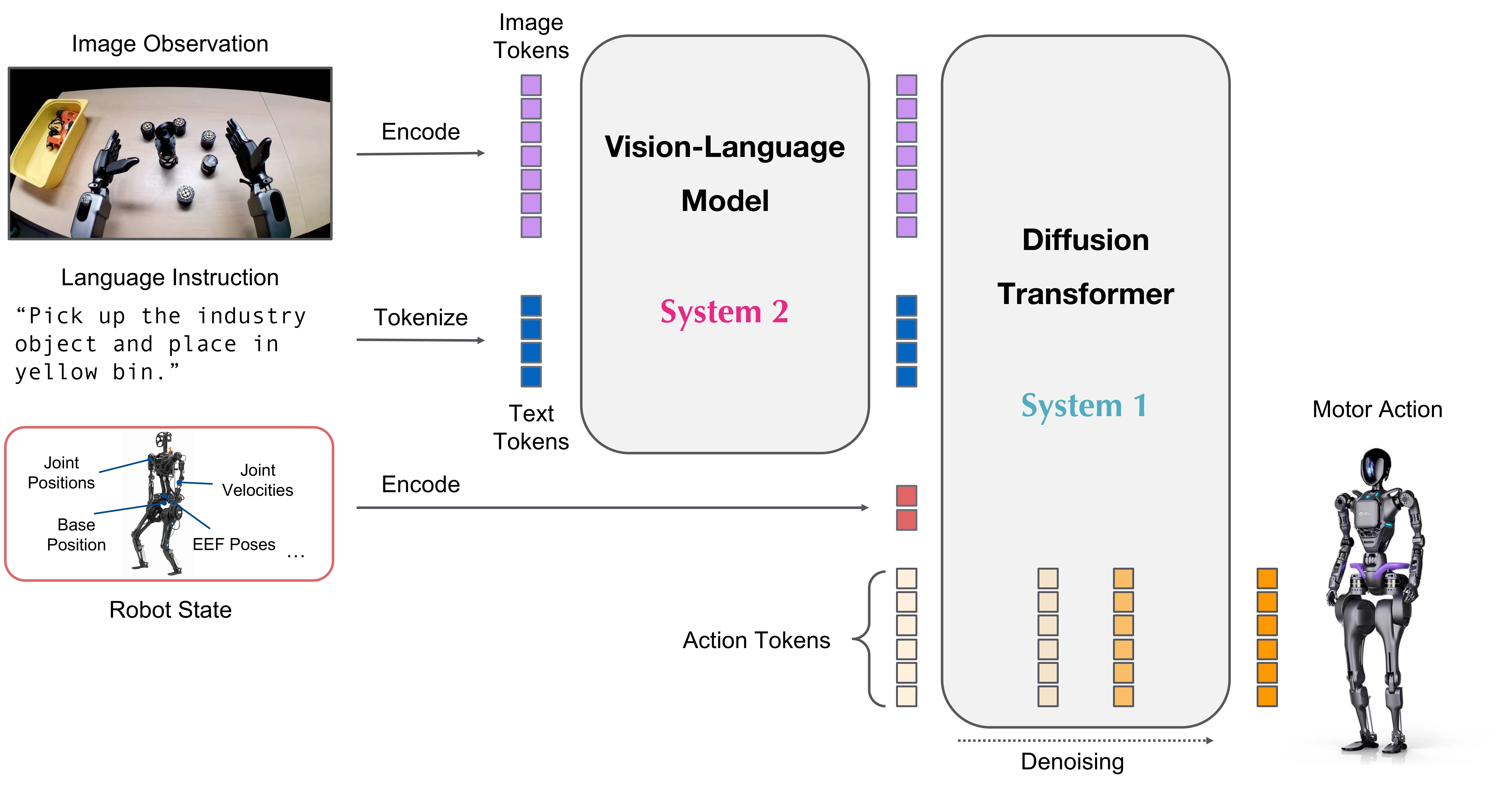
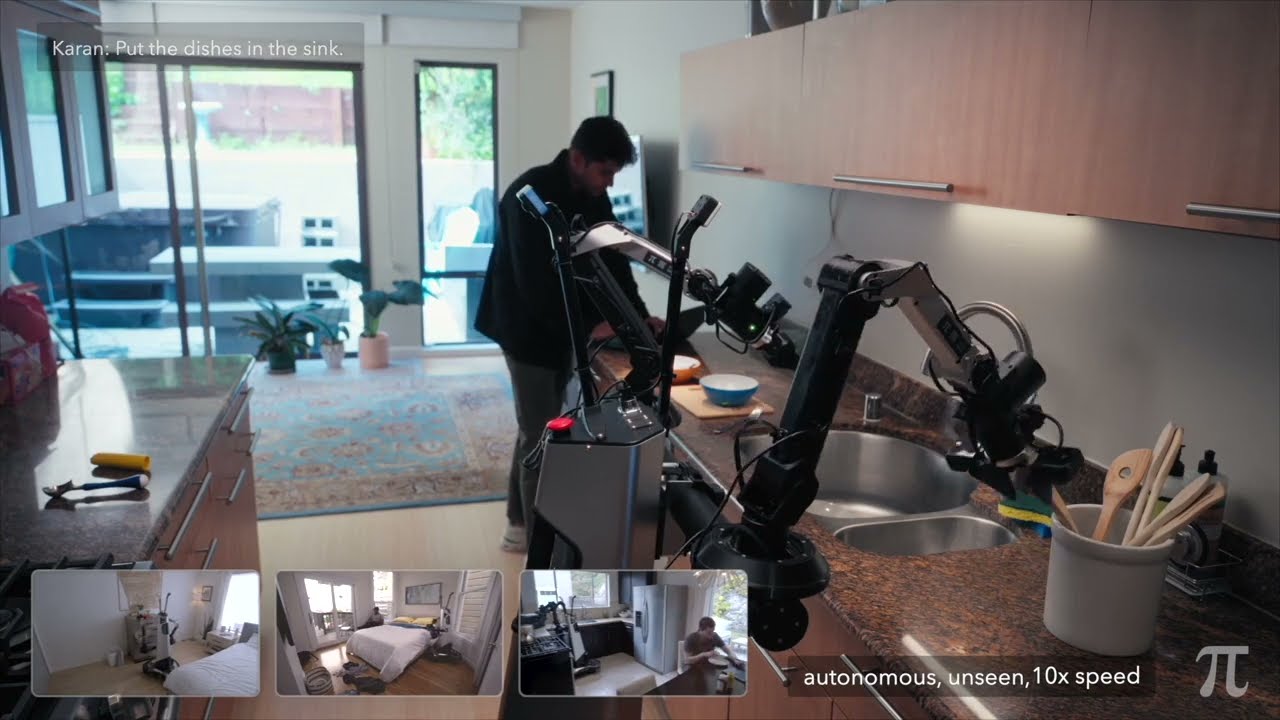
Project GR00T
NVIDIA (2024/2025)
Designed specifically for humanoid robots to be general-purpose assistants.
Key Idea: Dual-System Architecture
Inspired by "System 1 vs System 2" thinking.
System 2 (Slow): A VLM planner reasons about the task and goals.
System 1 (Fast): A high-frequency policy executes the motor skills.
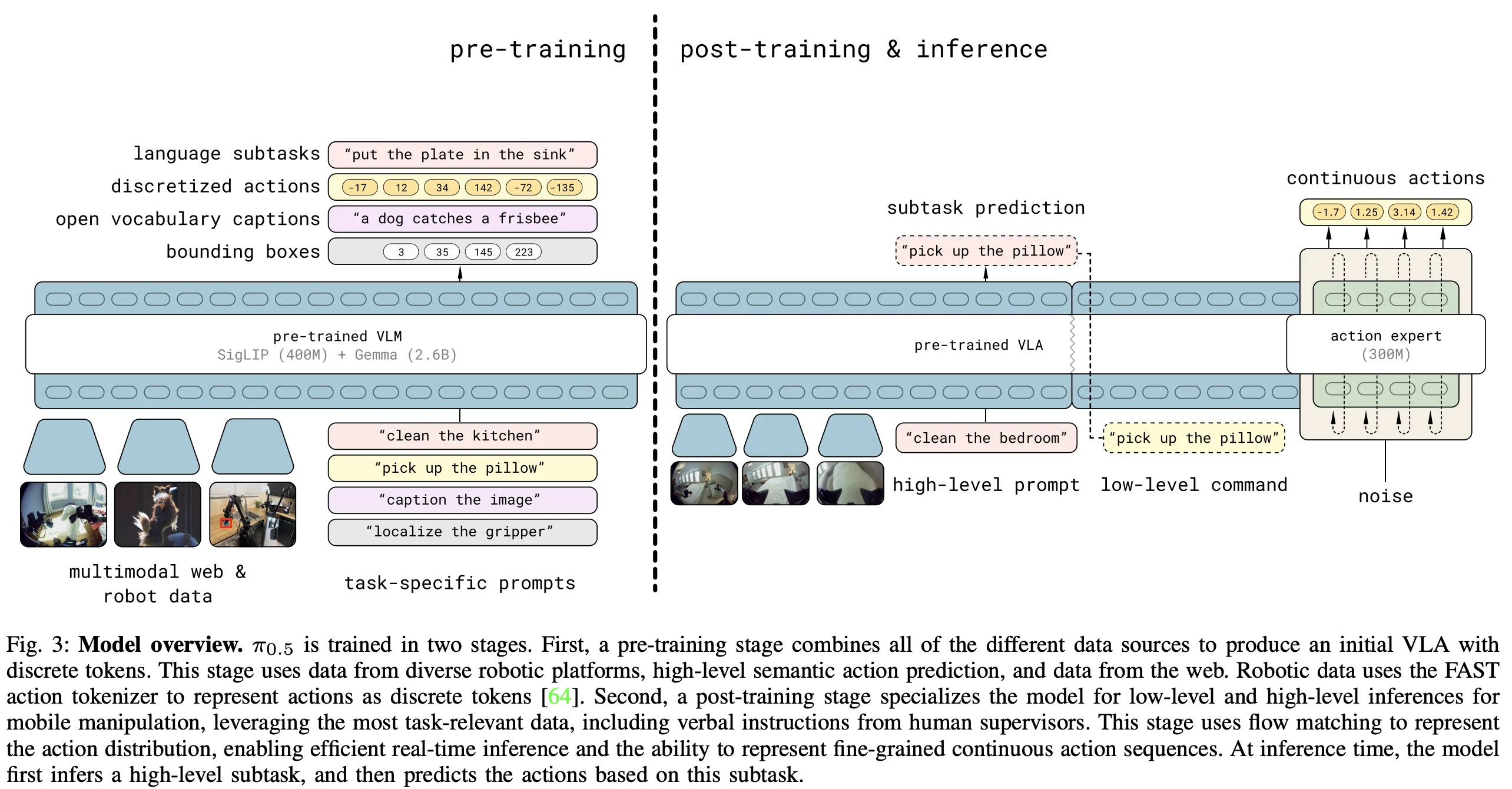
$\pi_{0.5}$
Physical Intelligence (2024/2025)
A true VLA (Vision-Language-Action) foundation model. Pre-trained on 10,000+ hours of diverse robot data (OXE + Proprietary).
Key Idea: Flow Matching
Uses Flow Matching (a simpler, faster alternative to Diffusion) to generate continuous action trajectories. This allows a single "brain" to control many different robot bodies by learning a shared physical understanding.
The "Zero-Shot" Myth: The Generalization Gap
Why "Generalist" models still struggle in the real world
1. The Reality Check
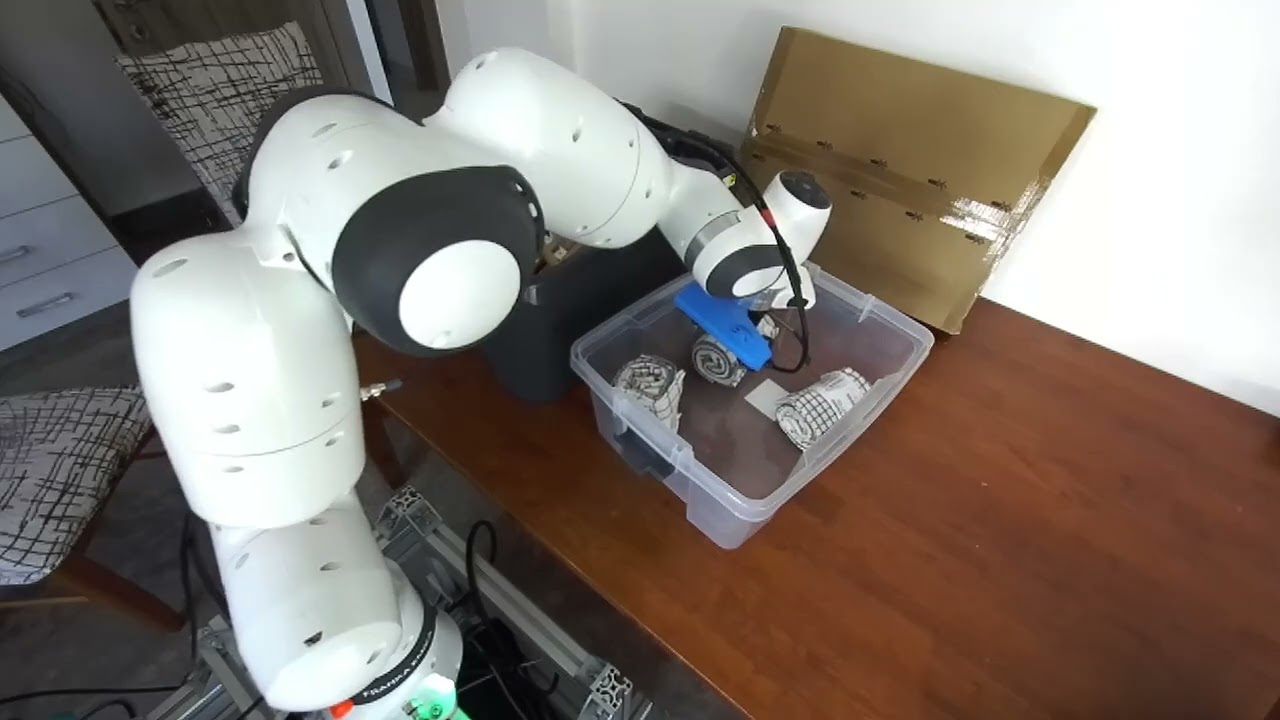
The Test: We ran a Droid-tuned model on a Droid robot.
The Result: Failure. Even with identical hardware, the policy broke.
2. The Root Causes
Data Starvation: We lack the data scale to learn generalized physics (friction, mass).
The RL Gap: Robots cannot safely "practice and fail" in the wild to self-improve.
3. The Verdict
Fine-Tuning is Mandatory.
Foundation models give you the "syntax" of movement; local data gives you the "semantics" of the task.
Positronic: The Toolset to "Train Your Robot"
A Python-Native Stack for the Full Lifecycle
1. The "Glue"
We bridge the gap between raw hardware drivers and high-level training libraries.
A unified OS: Collect $\to$ Manage $\to$ Train
2. The Workflow
- Collection: Accessible teleop via mobile / VR.
- Orchestration:
pimm&dataset. - Training: Native OpenPI, LeRobot integration.
3. The Vision
We handle the infrastructure plumbing so you don't have to.
You focus on the data and the policy.
Collection
iPhone / WebXR
Training
LeRobot / OpenPI
Real World
Robot Execution
The Future is Physical. Build It With Us.
The "Web 1995" Moment for Robotics
1. The Barrier is Gone
- Hardware: Build an arm for <$200, or dual-arm for <$5,000.
- Software: Positronic is Open Source & Python-native.
- Data: Collect it with the phone in your pocket.
2. Your Next Steps
- Star the Repo: Explore code, try WebXR teleop.
- Join the Hub: Building the community here in Paphos.
- Start Collecting: We need your data & experiments.
Scan to Join Discord & GitHub
Sergey Arkhangelskiy
Positronic Robotics